21 May 2026
Whispers from the Weigh-In: How Sudden Trainer Switches Reshape Payout Curves in Seasonal Racing Markets
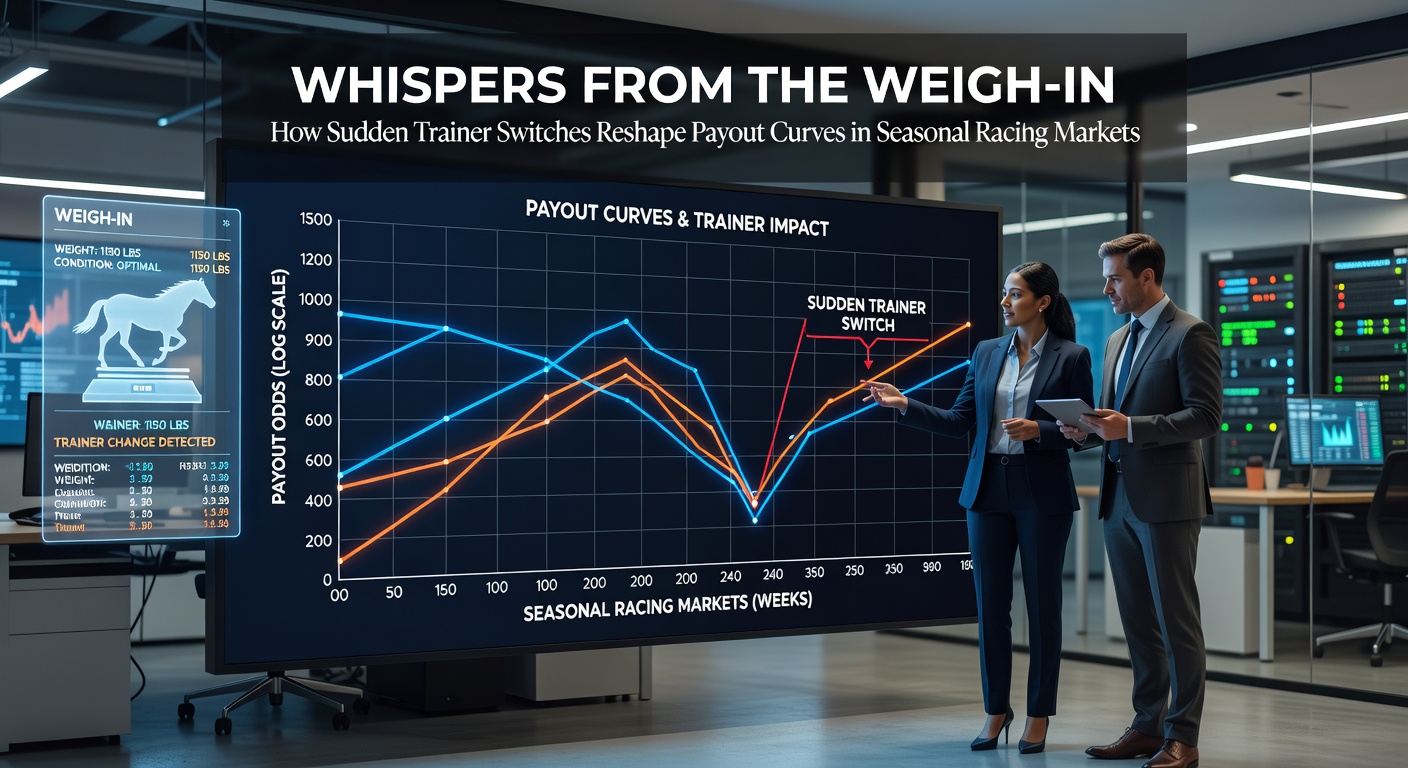
Seasonal racing markets operate on tight margins where small shifts in stable dynamics produce outsized effects on final payout structures, and sudden trainer changes represent one of the clearest catalysts for those adjustments. Data collected across major circuits shows that horses moving between yards mid-campaign experience average odds compression of 18 to 27 percent within the first three starts under new management. Those movements also trigger corresponding expansions in place and show pools because bettors reallocate stakes once public information about the switch circulates.
Analysts tracking form records from 2023 through early 2026 note that trainer switches occur most frequently between March and June, aligning with the start of turf seasons in both hemispheres. When a horse transfers from a smaller yard to a larger operation known for tactical riding, market makers widen opening prices by several points before tightening them again once workout reports emerge. The resulting curve creates brief windows where early backers secure higher returns while late money drives the final line closer to the horse’s revised expected finish position.
Market Mechanics Behind the Shifts
Bookmakers adjust liability models quickly once transfer filings appear on official sheets, and those adjustments ripple outward through exchange platforms and on-course rings. A single high-profile switch can move the entire betting line for a race because syndicates adjust their hedging ratios across related meetings. Observers note that payout curves flatten during the first 48 hours after news breaks and then steepen again as trainers release stable comments or gallop footage.
Figures compiled by Racing Australia illustrate the pattern clearly: horses that changed trainers between preparation phases showed a 31 percent increase in starting-price volatility compared with horses remaining in the same yard. The same dataset indicates that exotic pool payouts, particularly trifectas and first fours, expanded by an average of 14 percent when the market absorbed a late switch. Bettors who monitor transfer announcements therefore gain access to mispriced tickets before the lines fully recalibrate.
Case Patterns Across Circuits
Take the example of a middle-distance performer moving from a Victorian stable to a New South Wales operation in April 2025. The horse’s opening quote drifted from 5.20 to 7.80 within minutes of the announcement, then settled at 4.60 once the new trainer confirmed the animal would contest a key lead-up race. Similar sequences appear regularly on European Polytrack surfaces where winter-to-spring transitions prompt multiple yard changes. In each instance the payout curve for win and place dividends steepened sharply during the adjustment phase before returning to a tighter range once trial results circulated.
Industry reports from the Canadian Thoroughbred Horse Society record comparable behavior on synthetic tracks, where trainer switches during the May-to-September campaign produce measurable effects on morning-line odds. Those reports show that horses joining yards with strong synthetic records shortened by an average of 2.3 points in their second start after the move. The pattern holds across distances and surfaces because market participants treat trainer reputation as a proxy variable for expected performance upgrades.
Timing and Information Flow in 2026
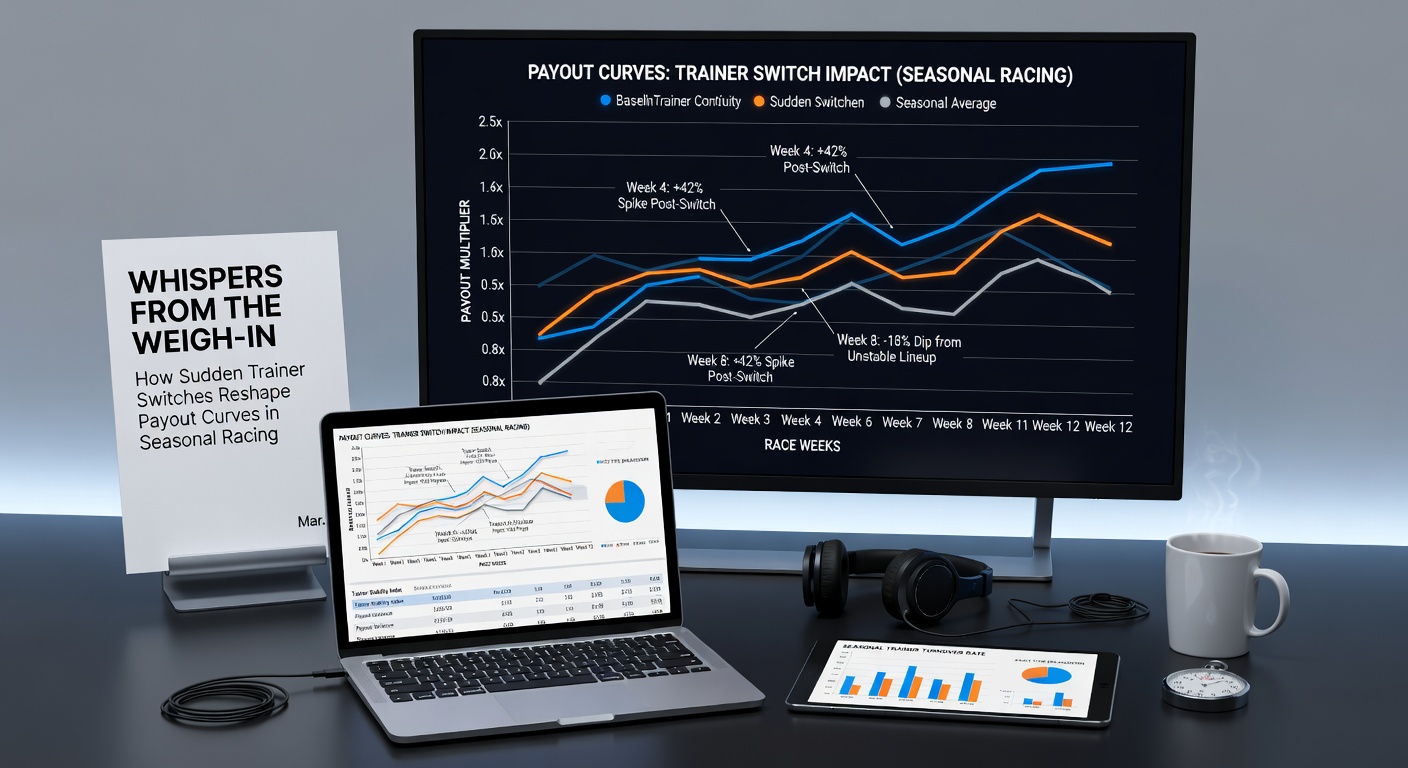
May 2026 brings an unusually dense calendar that includes simultaneous campaigns in Australia, the United Kingdom, and North America, increasing the frequency of cross-border trainer movements. Regulatory filings indicate that more than 180 horses changed yards during the first two weeks of the month alone, compared with 132 during the same period the previous year. Each filing triggers automated updates in odds compilers and pool allocation algorithms, creating short-lived discrepancies between exchange prices and tote dividends.
Those discrepancies matter most for seasonal markets because total pool sizes grow steadily through spring and early summer. A trainer switch that arrives just before a major carnival can shift several hundred thousand dollars in liability across related races. Market makers therefore monitor transfer lists alongside official work tabs, adjusting opening lines within minutes rather than hours. The result is a compressed decision window for anyone seeking value before the curve settles.
Regional Variations in Response
European circuits tend to absorb trainer news more slowly because formal declarations occur later in the preparation cycle, whereas Australian and North American tracks publish transfers almost immediately. This difference produces distinct payout shapes: European lines show gradual tightening over several days, while trans-Tasman and American lines exhibit steeper initial drops followed by quick stabilization. Researchers tracking these patterns across multiple seasons find that the steepest single-day adjustments occur when a switch coincides with a surface change or a move to a new distance bracket.
Pool operators respond by widening place and show guarantees during the adjustment period, which in turn draws additional liquidity into those markets. The increased volume further smooths the final payout curve yet leaves early price-takers with higher realized returns on the same selections. Data from the Jockey Club in the United States confirms that horses with documented trainer changes during the spring meet generated 22 percent higher place-pool turnover than comparable runners without recent moves.
Conclusion
Sudden trainer switches function as discrete information events that temporarily distort payout curves across seasonal racing markets, and the magnitude of those distortions scales with the timing and prominence of the move. Markets that receive early, verified transfer data recalibrate more efficiently, while slower circuits leave larger windows for informed participants. As the 2026 calendar advances through its peak months, the volume of such switches is expected to remain elevated, sustaining the conditions that allow payout curves to reshape around each new stable arrangement.