28 Jul 2026
Tracing How National Team Windows Alter Domestic League Betting Markets

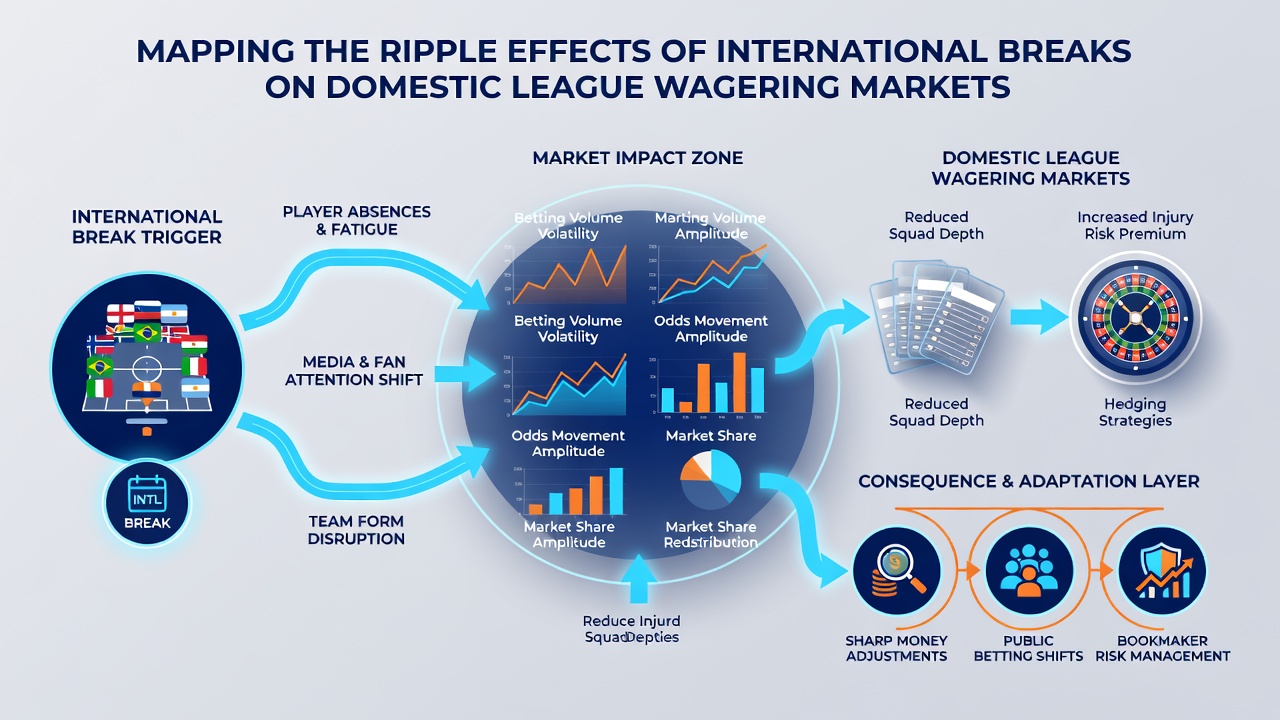
International breaks create measurable disruptions across domestic league schedules, and betting operators track these periods closely because odds markets respond in predictable yet layered ways. When national team fixtures pull players from club squads, bookmakers adjust lines for upcoming domestic matches based on availability data, recent form, and historical performance trends during recovery windows. Data from multiple European leagues shows that goal-scoring averages dip slightly in the first round of fixtures after breaks, while draw percentages rise by an average of 4 to 6 percent according to aggregated match statistics.
Bookmakers widen spreads on player props and team totals because squad rotation becomes harder to forecast. Those who study these cycles note that markets for matches involving clubs with heavy international representation tend to see reduced liquidity in the days leading up to the window, then rebound once lineups are confirmed. This pattern repeats across the Premier League, Bundesliga, and Serie A seasons when FIFA or UEFA calendars overlap with domestic programming.
Volume Shifts and Market Liquidity Patterns
Betting turnover on domestic leagues typically contracts during the first week of an international break and then partially recovers in the second week as attention moves toward the return fixtures. Industry reports compiled by regional gaming associations indicate that operators in several markets record a 12 to 18 percent drop in football wagering activity during these pauses, with some volume migrating to alternative sports or in-play tennis and basketball options. Liquidity on accumulator markets thins noticeably because bettors hesitate when key personnel are absent or returning from travel.
Research conducted by academic groups in North America and Europe has examined these cycles using datasets spanning multiple seasons. One analysis found that overround percentages on major domestic matches remain stable, yet the distribution of bets across specific outcomes changes as information about absences circulates. Bettors who follow squad news closely often shift focus toward under markets or draw outcomes in the immediate post-break round.
Player Availability and Odds Adjustments
Clubs with large numbers of players on international duty face greater uncertainty around fitness upon return, and this uncertainty feeds directly into pre-match pricing. Odds compilers incorporate travel fatigue metrics, historical injury rates after call-ups, and minutes played during the break when setting opening lines. Markets for matches scheduled within 72 hours of the final international fixture show wider spreads on both sides and totals compared with standard midweek rounds.
By July 2026 several top European leagues will have already navigated two major international windows, providing fresh datasets for analysts who track these effects. Early indicators suggest that the pattern of reduced scoring persists, though recovery speed varies by league and by the distance players travel between national team camps and club facilities. Operators in Australia and Canada have begun incorporating similar timing adjustments into their domestic league offerings when international calendars create parallel disruptions.
Cross-Market Effects and Alternative Wagering
When domestic football activity slows, some volume flows toward other events that continue uninterrupted. Tennis tournaments, basketball summer leagues, and cricket series often absorb displaced betting interest. Operators report that live betting on these alternative markets increases during the middle portion of international breaks, partially offsetting the temporary lull in football stakes. The same data sets reveal that once domestic leagues resume, accumulators regain popularity faster than single-match bets, particularly when multiple teams return with full squads intact.
Regulatory filings from gaming commissions in different jurisdictions document these seasonal shifts without attributing causation to any single factor. Instead, they note the correlation between FIFA and UEFA calendars and measurable changes in handle distribution across product categories. Those monitoring the July 2026 window will compare results against prior cycles to determine whether the magnitude of volume transfer remains consistent.
Conclusion
International breaks produce documented ripple effects on domestic league wagering through changes in player availability, scoring patterns, and overall market liquidity. Operators and analysts rely on historical datasets and real-time squad information to calibrate pricing and risk management during these periods. As additional cycles unfold through 2026, updated figures from multiple regions will continue to clarify the scale and consistency of these market responses across different leagues and betting formats.