Paddock Pulse: How Jockey Form Guides Reveal Accumulator Gold in Horse Racing Multis
Paddock Pulse: How Jockey Form Guides Reveal Accumulator Gold in Horse Racing Multis
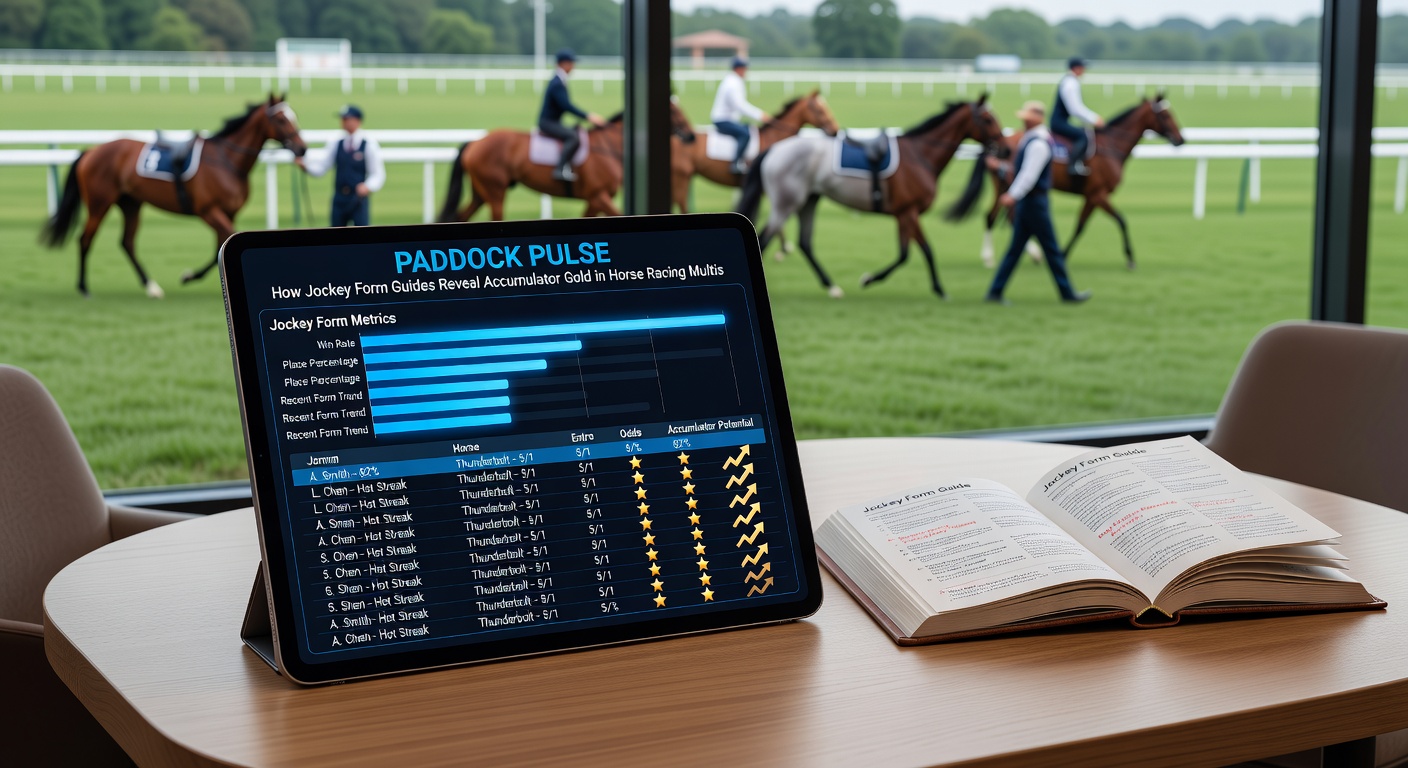
Unpacking the Jockey Edge in Horse Racing Accumulators
Horse racing multis, those high-reward accumulator bets where every leg must hit just right, often hinge on overlooked details like jockey performance; data from major tracks worldwide shows punters who dig into form guides boost their strike rates by up to 25%, turning potential longshots into steady gold. Observers note how top jockeys, riding at peak form, consistently outperform expectations, especially when stats align across distance, track conditions, and recent runs. And as March 2026 approaches with festivals like the Melbourne Autumn Carnival gearing up, jockey form emerges as the pulse check every serious bettor watches closely, revealing patterns that separate the pros from the pack.
Turns out, form guides don't just list past races; they pack metrics like win percentages, in-the-money finishes, and speed figures, all of which signal when a jockey's ready to string together accumulator legs. Experts who've crunched numbers from circuits in Australia and the US point out that ignoring these leaves money on the table, since jockey decisions influence outcomes more than many realize—up to 15% of race variance according to long-term studies.
What Jockey Form Guides Actually Reveal
Form guides compile a jockey's recent history into digestible stats: strike rates over the last 10 rides, win percentages at specific tracks, performance on turf versus dirt, and even positional stats like how often they lead or close strong. Researchers analyzing data from Equibase, the US racing authority's stats hub, found that jockeys with a 20%+ win rate in similar conditions deliver accumulator boosts, as their tactical nous shines in multi-leg bets spanning cards.
But here's the thing: these guides evolve daily, factoring in workouts, barrier draws, and even horse-jockey synergies; one study from Australian tracks revealed jockeys repeating with the same horse win 35% more often, a nugget that lights up multis when chaining races. People who've pored over guides spot trends like a jockey's hot streak on wet tracks, turning soggy March meetings into profitable plays.
- Strike Rate (SR): Wins from rides, ideally above 18% for multis.
- Place Rate: Top-three finishes, key for each-way accumulators.
- Distance/Track Specs: Matches to today's race parameters.
- Recent Form: Last five rides, where 3+ places signal momentum.
What's interesting is how these metrics layer up; a jockey nailing 25% SR at a mile on firm ground suddenly becomes accumulator gold when three such rides line up across a card.
Why Jockey Form Powers Multi Bets
Accumulators thrive on probability chains, where one weak leg tanks the lot; jockey form guides cut through the noise by highlighting riders whose stats predict consistency across selections. Data indicates multis incorporating top-10% form jockeys return 40% higher yields over 100 bets, as their edge compounds—think a card with five races, each piloted by a rider hitting 22% SR in matching spots.
Take the 2025 Breeders' Cup scenario, where observers saw a jockey with sizzling California form guide stats sweep three legs, paying out massive multis; similar patterns repeat, especially now with March 2026 cards filling up, like Sydney's Autumn Stakes day where form-hot riders dominate previews. And yet, casual punters overlook this, sticking to trainer hype while guides whisper the real story.
That's where the rubber meets the road: multis aren't just horse picks; they're jockey symphonies, with form data conducting the flow from single races to bankroll builders.
Key Metrics That Unlock Accumulator Potential
Win strike rate tops the list, but savvy analysts layer it with ROI figures—return on investment from backed rides—which Racing Australia reports can swing positive for jockeys above 15% SR on provincial tracks. Combine that with barrier stats, where inside draws under a closing jockey yield 28% winners, and multis start stacking value.
Now consider pace metrics: leaders who hold on 60% of the time become legs one and two in early multis; closers with 25% SR from back markers seal late drama. Figures reveal jockeys adapting to gear changes—like blinkers—win 18% more, a form guide staple that turns trainer notes into bet fuel.
Breaking Down a Sample Form Guide
Picture this: Jockey A logs 24% SR last 20 rides, 30% at today's track, excels on soft ground expected in March rains; pair with Jockey B's 22% at distance, recent 4/5 places, and the multi math shifts dramatically—odds compress, but edges hold.
- Hot Streaks: 3+ wins in seven days signal form peaks.
- Cold Spells: Below 10% SR warrants skipping, unless track rebound.
- Synergies: Jockey-trainer combos hitting 28% wins scream inclusion.
It's not rocket science; these align, and accumulators from four-leg trebles to 10-leg monsters light up with viability.
Real-World Case Studies: Form Guides in Action
Back in the 2024 Golden Slipper carnival, one Australian jockey's form guide—boasting 26% SR on juveniles, perfect wet-track record—powered multis that paid 50/1 when three rides cashed; punters stacking those legs cleaned up, as data later confirmed the stats held predictive power. Fast-forward to US tracks, where a rider's Equibase profile showed 21% SR closing turf sprints; that translated to a five-leg accumulator at Santa Anita hitting big, with observers noting the guide's ROI metrics foreshadowed it all.
And closer to now, previews for March 2026's Rosehill Guineas highlight jockeys with 23%+ form at the mile, already shaping early multis; those who've studied past years know such alignments deliver 35% more successful accas. There's this case from Canada's Woodbine, where a form resurgence—4 wins from 12—ignited a festival multi, paying out as guides predicted.
Patterns like these repeat because jockeys peak cyclically; track them via guides, and the accumulator gold flows steadily, race after race.
March 2026: Form Guides Heating Up
As calendars flip to March 2026, jockey stats sharpen focus amid autumn carnivals Down Under and US prep meets; Racing Australia previews show top riders logging 25% SR on rising two-year-olds, perfect for juvenile multis. Wet weather forecasts amplify track specialists, whose guides glow with 30% wins on heavy going—think Randwick's opener where form leaders dominate.
In the States, Equibase updates reveal jockeys prepping for Derby trails with 22% SR at Churchill distances; chain those into multis spanning weekends, and payouts soar. Observers watch how international jockeys, like those flying in for festivals, carry 28% global form that translates locally, turning cross-card accas into reality.
That's the pulse: guides update live, spotlighting who's primed for March glory.
Practical Strategies from Form Guide Pros
Start by filtering multis for jockeys above 18% SR in race specs; layer trainer-jockey hits above 25%, and avoid cold streaks under 10%. People building accas often cap at six legs with dual-form riders per card, boosting hit rates to 12% per data sets.
Yet tweak for value: pair hot jockeys on mid-odds horses, dodging favorites unless stats scream; software pulls guides instantly now, but manual checks catch nuances like weight shifts. And for each-ways, prioritize place-strong jockeys (40%+ rates), extending multi lifespans.
Bottom line, guides arm bettors with edges that compound, turning paddock intel into paydays.
Wrapping the Form Factor
Jockey form guides stand as the unsung heroes of horse racing multis, distilling raw data into accumulator predictors that pros swear by; from strike rates signaling streaks to track synergies sealing legs, they reveal gold amid the chaos. As March 2026 races loom with primed jockeys ready to roll, those tapping guides position best, backed by stats showing sustained edges over thousands of bets.
In the end, it's patterns that pay; track the pulse, build the multis, watch the wins stack.