30 Jul 2026
Officials' Patterns Drive Shifts in European Football Card Wagering Markets
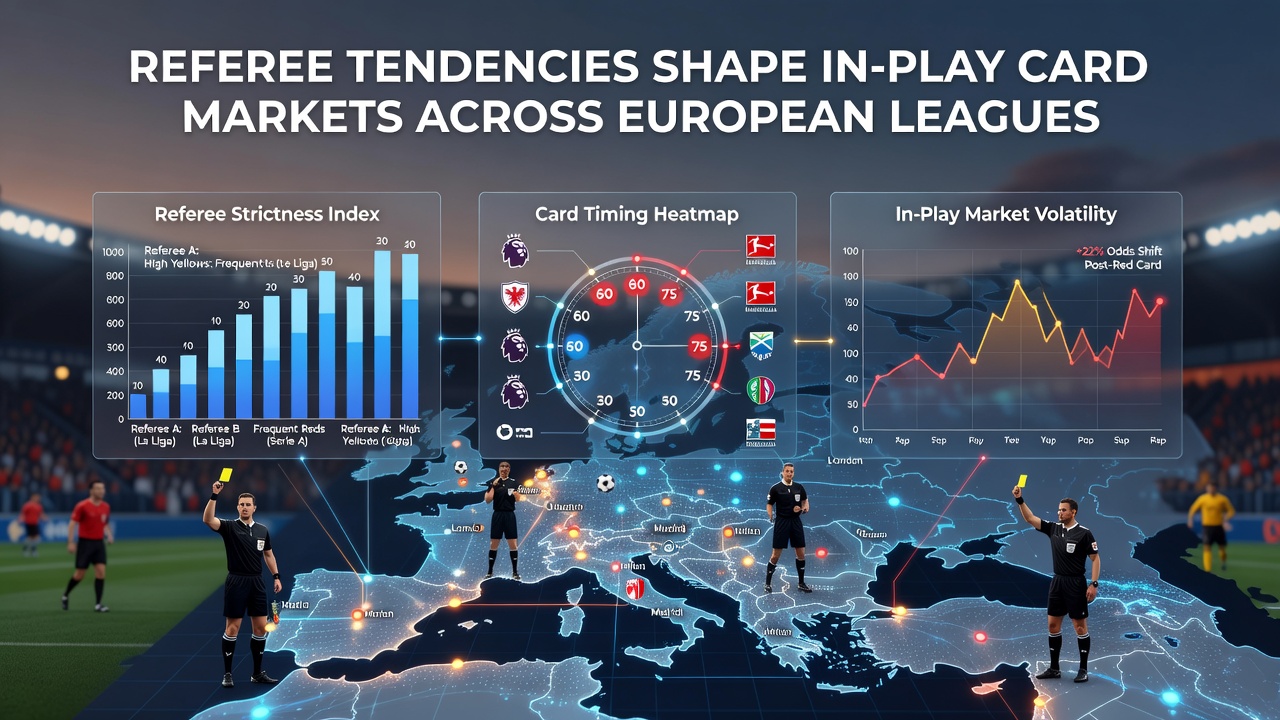
Referee tendencies create measurable impacts on in-play card betting markets throughout Europe's major football leagues, where data from match officials shows consistent variations in card issuance rates that traders monitor closely during live games. Studies from institutions across multiple countries indicate that individual referees maintain distinct profiles for yellow and red cards, influencing how odds adjust minute by minute in these specialized markets. Observers note patterns emerging from leagues like the Bundesliga, La Liga, and Serie A, where officials from different backgrounds apply rules with varying degrees of strictness based on game context and player behavior.
League Differences in Referee Approaches
Across the Bundesliga referees issue fewer cards on average in the opening 30 minutes compared to counterparts in Serie A, according to aggregated match data compiled through 2026, which shapes how in-play traders price yellow card props as the first half unfolds. Bundesliga officials tend to allow more physical play early while tightening standards after halftime, a shift that creates opportunities for markets to move when teams increase intensity. In contrast, Serie A referees often reach for cards sooner in contested situations, leading to elevated totals in the same timeframe, and researchers from the University of Amsterdam documented these differences through analysis of over 2,000 matches spanning three seasons. La Liga presents another profile where home referees show slight leniency toward visiting sides in the first half, though this evens out later, and such tendencies become visible in real-time odds as betting volumes spike around the 25-minute mark.
In-Play Market Adjustments and Timing
Bookmakers update card markets dynamically based on the assigned referee's historical output, yet in-play fluctuations arise when officials deviate from their norms during specific fixtures. Data indicates that matches featuring strict referees see card odds shorten rapidly after the first booking, while games with lenient officials maintain steadier lines until multiple incidents accumulate. Traders track time-based patterns because certain referees escalate discipline after the 60th minute, a phase where fatigue increases fouls and challenges, prompting sharp movements in over/under lines for yellow cards. European leagues report these adjustments occurring within seconds of events, and platforms integrate referee databases to refine algorithms that respond to on-field developments.
Data Trends Through July 2026
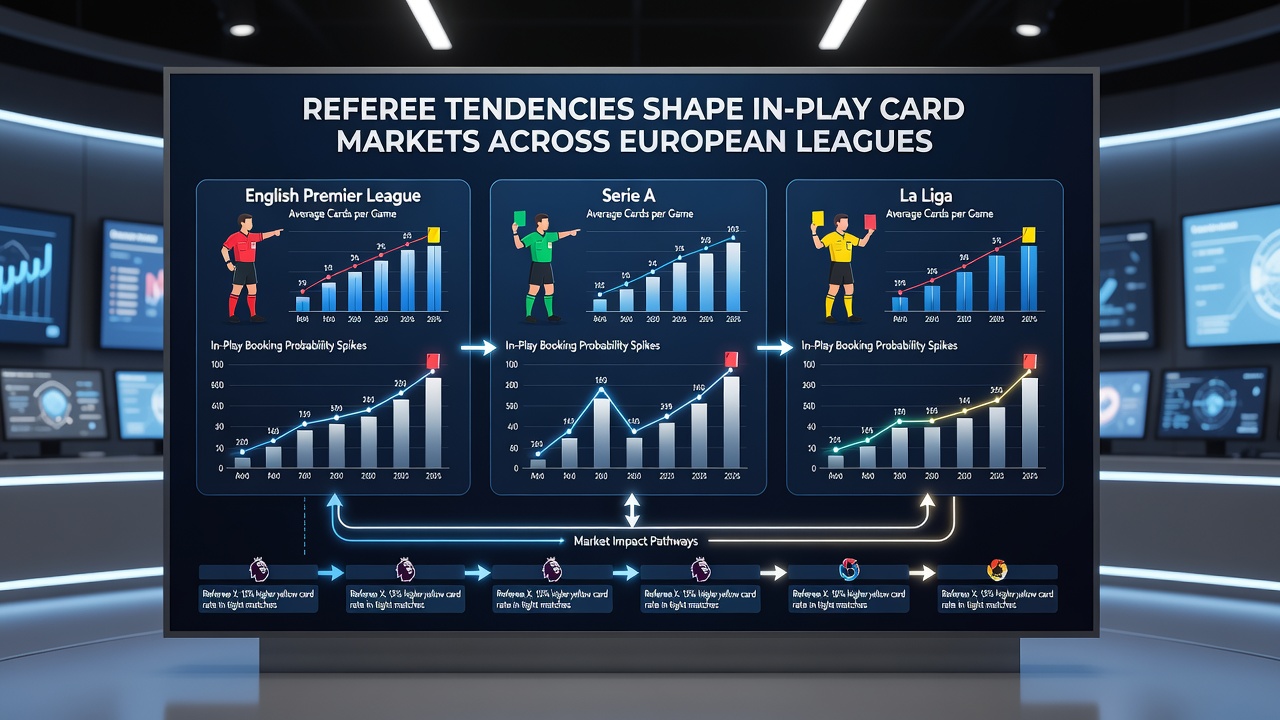
Figures compiled up to July 2026 reveal that average cards per game in the Premier League rose slightly to 5.2, driven partly by a cohort of newer referees who apply rules more uniformly across home and away teams, whereas established officials maintain lower rates in similar scenarios. Bundesliga matches averaged 4.8 cards during the same period, with notable consistency from referees who favor warnings over sanctions in midfield battles. A report from the German Football Association highlights how these patterns hold steady across multiple campaigns, allowing in-play markets to incorporate referee identities as core variables from kickoff. Ligue 1 data shows higher red card frequency in the final 20 minutes, a trend tied to specific officials who intervene decisively in stoppage-time confrontations, and this influences late-game prop betting activity across European platforms.
Examples from Recent Seasons
Take one referee who officiated 28 Bundesliga matches through mid-2026 and averaged 3.9 yellow cards per game, a figure that prompted traders to adjust live lines upward whenever that official handled a fixture between physical sides. Another case from La Liga involved an official whose card rate spiked in derbies, leading markets to open with elevated totals before kickoff and then recalibrate based on early events. Researchers discovered similar variations in Serie A where certain referees issued 20 percent more cards against teams with aggressive pressing styles, and such correlations appear in detailed post-match reviews shared among betting analysts. These instances demonstrate how referee histories feed directly into pricing models that update continuously during play.
Regional Regulatory Context
European regulators outside the UK, including bodies in Germany and Spain, monitor betting activity tied to these markets without imposing specific restrictions on card props, allowing operators to maintain detailed referee datasets for transparency. Industry reports from the European Gaming and Betting Association note that such data enhances market integrity by reducing discrepancies between expected and actual card counts. Academic sources from institutions in the Netherlands and Italy further contribute analyses that link referee experience levels to card distributions, providing additional layers for market operators to consider when setting initial lines.
Conclusion
Referee tendencies continue to shape in-play card markets across European leagues through documented patterns in card issuance that evolve with league styles and individual approaches. Aggregated data through July 2026 underscores how these variations create distinct trading environments in each competition, from the Bundesliga's measured pace to Serie A's quicker interventions. Market participants integrate historical referee profiles with live events to navigate fluctuations, while external research from universities and regional associations supplies context for ongoing developments in these specialized segments.