20 Jun 2026
Fixture Congestion Reshapes Accumulator Selections in Europe's Elite Competitions
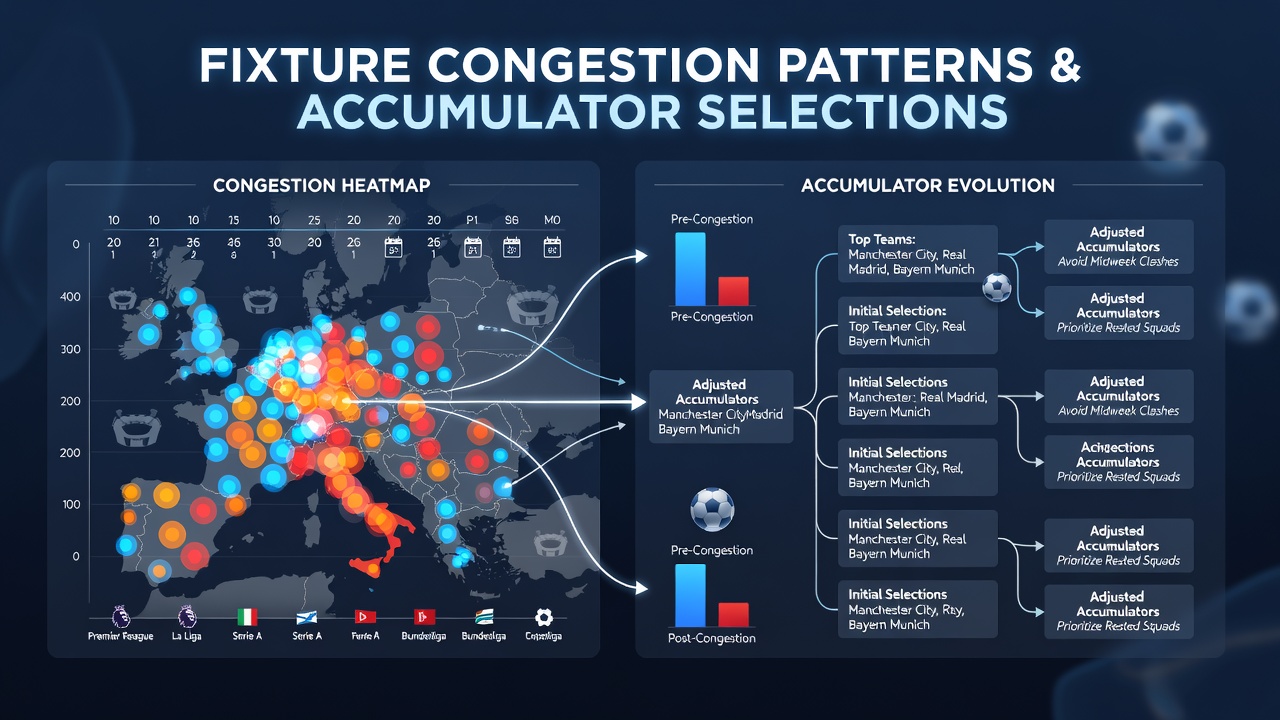
European football calendars pack multiple competitions into tight windows, and those patterns force bettors to reconsider how they build accumulators across leagues such as the Premier League, La Liga, Bundesliga, Serie A and the UEFA Champions League. Data from recent seasons show increased match density correlates with squad rotation, fatigue markers and shifts in win probabilities that directly influence multi-bet construction.
Calendar Structures Driving Congestion
Domestic leagues run parallel to European club tournaments, and the overlap creates clusters of three or four matches within ten to fourteen days for top clubs. UEFA's scheduling model places Champions League and Europa League group and knockout stages alongside league weekends, while national cup ties add further fixtures. Observers note that winter periods, international breaks followed by catch-up rounds, and end-of-season title races compound these loads, producing measurable effects on player availability and tactical choices.
Researchers tracking GPS and heart-rate data across elite squads record elevated fatigue scores during these blocks, which teams address through rotation policies. Those policies alter starting line-ups and reduce the reliability of historical head-to-head statistics that many accumulator builders rely upon when selecting outcomes.
Performance Metrics Under Load
Match statistics compiled by Opta and similar services reveal drops in high-intensity running and pass-completion rates after congested sequences. Teams facing three fixtures in eight days post fewer shots on target and concede more set-piece opportunities, patterns that appear consistently across the five major leagues. Accumulator selections built solely on pre-congestion form therefore encounter higher variance once the schedule tightens.
June 2026 brings additional planning complexity because FIFA's expanded Club World Cup and national-team qualifiers overlap with pre-season preparations for the 2026/27 campaign. Clubs already balancing domestic and European commitments must integrate recovery protocols earlier, and early indicators from training-ground monitoring suggest rotation will begin sooner than in prior off-seasons.
Accumulator Construction Adjustments
Bettors who monitor fixture lists adjust stake distribution and outcome selection when congestion peaks. Selections shift toward matches involving squads with greater squad depth or recent rest advantages, while avoiding combinations that pair multiple teams emerging from midweek European ties. Data sets from the past five seasons demonstrate that underdogs at home after a European away fixture cover the spread more frequently than their pre-match odds imply, prompting some to include draw or Asian-handicap options rather than straight home wins in accumulators.
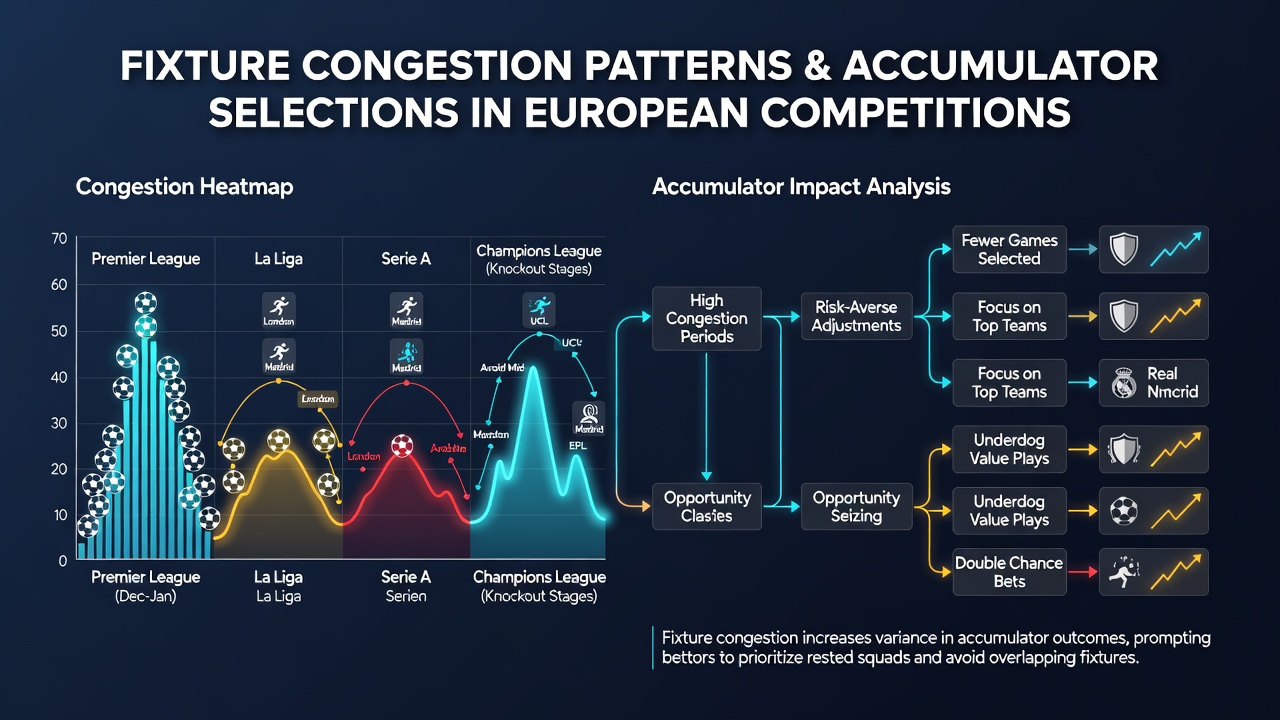
Leagues with winter breaks, such as Bundesliga and Serie A, exhibit different congestion signatures compared with the Premier League's continuous December schedule. Bettors therefore weight selections according to each competition's rest patterns rather than applying uniform rules across all legs of an accumulator.
Evidence from Specific Competitions
Champions League knockout ties scheduled between league rounds produce the clearest rotation signals. Clubs prioritising domestic titles rest key players for the return leg, and those rested squads often record lower expected goals when returning to league action three days later. Accumulator builders who track Champions League line-ups the night before domestic fixtures gain an information edge on probable line-up changes.
Europa League and Conference League participants face even denser calendars because they remain involved deeper into spring. Performance databases show these clubs suffer steeper second-half declines in matches immediately following Thursday night fixtures, a trend that influences whether bettors add over-2.5-goals or under-2.5-goals selections to their multis.
Monitoring Tools and Data Sources
Professional bettors integrate fixture-density algorithms with real-time injury reports and travel-distance metrics. Publicly available resources such as UEFA's published calendars and academic workload studies from institutions including Loughborough University's sports science department supply the raw inputs. Combining these datasets allows systematic identification of matches where congestion effects are strongest, turning schedule analysis into a repeatable component of accumulator construction rather than an ad-hoc adjustment.
Conclusion
Fixture congestion across European competitions produces predictable shifts in team behaviour and match outcomes that accumulator builders can quantify. By aligning selections with documented rotation patterns, rest differentials and league-specific scheduling quirks, bettors adapt their multis to the actual conditions clubs face rather than relying on static historical averages. Continued refinement of workload data and calendar transparency will keep these adjustments central to selections through the 2026 season and beyond.