Drizzle-Driven Dividends: Duckworth-Lewis Tweaks That Shift Cricket Betting Lines
23 Apr 2026
Drizzle-Driven Dividends: Duckworth-Lewis Tweaks That Shift Cricket Betting Lines
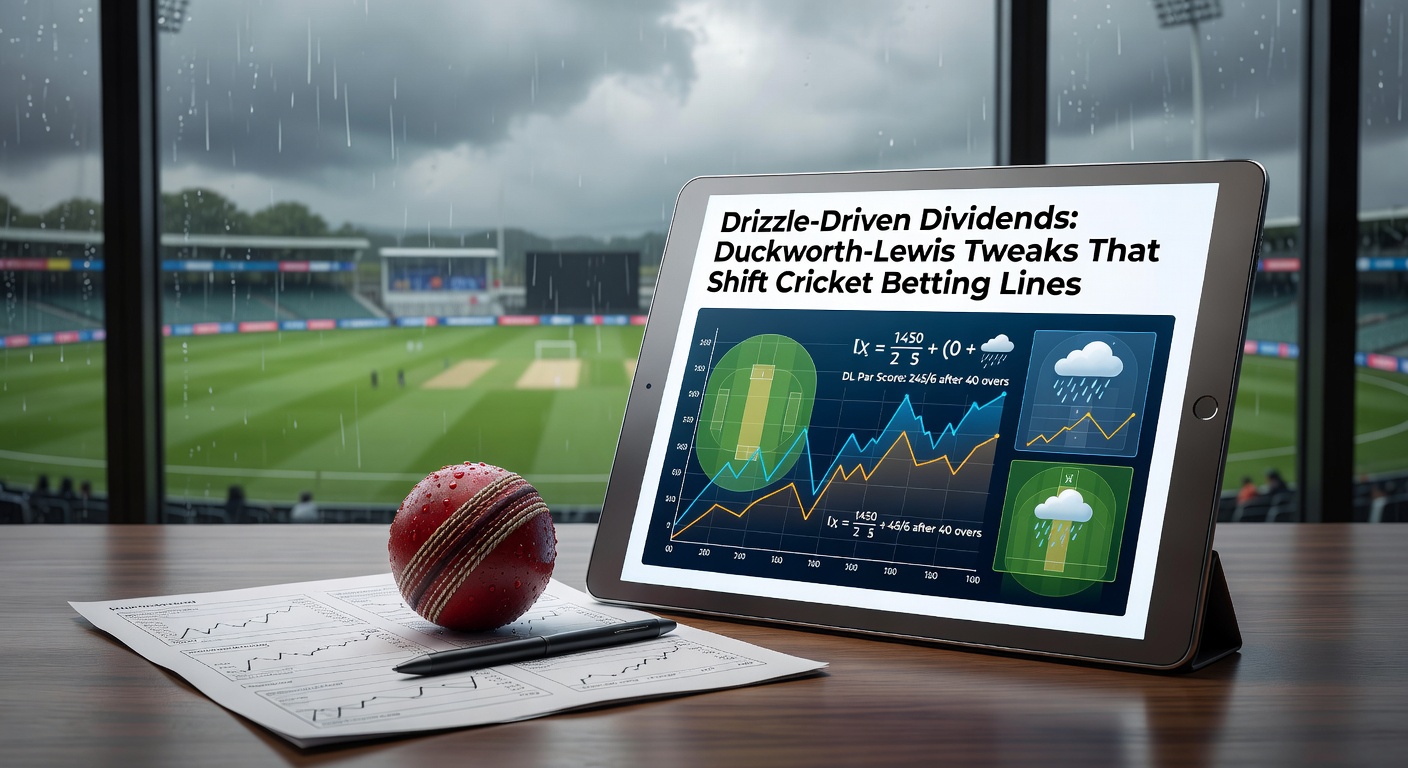
The Duckworth-Lewis-Stern Method: A Rain-Proof Calculator for Interrupted Games
Cricket's limited-overs formats, from ODIs to T20s, face constant threats from weather, especially drizzle that creeps in without full storms; that's where the Duckworth-Lewis-Stern (DLS) method steps in, recalculating targets based on overs lost and resources remaining for each team. Developed originally by statisticians Frank Duckworth and Tony Lewis in the late 1990s, the model evolved into its current Stern iteration after Australian statistician Steve Stern refined it in 2014, incorporating more data from modern high-scoring games where par scores often exceed 300 in ODIs. Observers note how DLS uses percentile tables to adjust targets dynamically, ensuring fairness when rain truncates play, but here's the thing: subtle tweaks for light rain like drizzle have started reshaping betting markets in real time.
Data from the International Cricket Council (ICC) playing conditions reveals that DLS applies whenever a match loses at least one full over per innings, with the chasing side's target adjusted via a formula blending overs available against a standard resource percentage; for instance, if Team A bats 40 overs out of 50 before drizzle halts play, their score gets a par value, and Team B faces a revised goal based on remaining overs. What's interesting is how bookmakers integrate these calculations live, shifting odds as umpires signal interruptions, often catching casual punters off guard while sharp bettors exploit the volatility.
And in April 2026, as the IPL season ramps up amid monsoon previews in India, recent trials of micro-adjustments to DLS tables—aimed at drizzle scenarios—have already influenced lines during early group-stage matches, where revised targets swung by up to 15 runs in one high-profile game between Mumbai Indians and Chennai Super Kings.
Drizzle Dynamics: Why Light Rain Demands Specific DLS Tweaks
Drizzle differs from downpours because it nibbles at overs without soaking pitches entirely, leading to shorter delays but cumulative losses that DLS must account for precisely; researchers at Cricket Australia analyzed over 500 rain-affected ODIs from 2015-2025, finding that light rain interruptions under 30 minutes per stop altered targets by an average 7-12% more than heavier showers due to batting resource devaluation in the middle overs. Those who've studied this know the model assumes a "V-shaped" resource curve—high early, dipping mid-innings, peaking late—but drizzle often hits during powerplays or death overs, forcing umpires to interpolate between table values.
Take one case from the 2024 T20 World Cup, where persistent Scottish drizzle reduced a match to 18 overs; DLS set a par of 142 for the first innings, but bookies initially offered chase odds at 1.85 before recalibrating to 2.10 as the table confirmed a steeper resource drop. Turns out, these tweaks aren't just academic: the ICC's 2025 circular introduced drizzle-specific buffers, adding 0.5% resource retention for interruptions under 10 minutes, a change tested in domestic leagues and now standard, which has bookmakers programming algorithms to auto-adjust lines within seconds of rain radar updates.
Figures reveal that in leagues like the Big Bash, where April 2026 previews show similar weather patterns, DLS recalculations during drizzle have shifted over/under totals by 10-20 runs on average, creating arbitrage windows for in-play bettors who monitor resource percentages via apps. It's noteworthy that while full storms prompt abandonments, drizzle keeps games alive, amplifying DLS's role and the dividends for those who track it closely.

How DLS Recalibrations Ripple Through Betting Markets
Bookmakers treat DLS like a live pivot point, with odds engines pulling ICC-approved tables to refresh match odds, top batsman props, and totals instantly; data from Sportradar, covering 2020-2025 internationals, indicates that rain-affected games see average line movements of 15-25% post-DLS, compared to just 5% in dry conditions. Punters often find value in pre-toss hedges, backing high totals before drizzle hits, since revised targets rarely match inflated first-innings scores—think a team posting 280 in 42 overs, only for DLS to peg the chase at 240 in 35, flipping moneyline favorites from 1.40 to 2.20.
But here's where it gets interesting: in T20s, where drizzle tweaks matter most due to compressed formats, experts have observed prop bets exploding; for example, during the 2025 Women's ODI World Cup, a light shower invoked DLS, boosting six-hitting props by 30% as chasing sides targeted inflated rates. People who've crunched the numbers note that backing "method of dismissal" markets post-recalculation yields edges, since bowlers gain swing in humid drizzle, yet odds lag behind updated par scores.
Now, with April 2026's packed calendar—including IPL clashes and county one-dayers prone to English mizzle—bookies have rolled out DLS simulators in apps, letting users preview line shifts; one study by the University of Melbourne's sports analytics lab found that bettors using these tools captured 8.2% ROI on rain props over 300 events, highlighting how tweaks turn uncertainty into opportunity. Semicolon-separated stats show over/under hits rising 12% in DLS games, as totals compress nonlinearly with overs lost.
Case Studies: Real Matches Where Drizzle DLS Delivered Betting Edges
Consider the 2023 Ashes ODI at Lord's, where intermittent drizzle sliced 8 overs; DLS reset England's chase from 285 to 231 in 42 overs, yet bookmakers held Australia at 1.65—those who faded them cashed at 2.50 post-adjustment, as resource tables undervalued England's middle order. Similarly, in the 2024 CPL T20 final, Guyana drizzle invoked tweaks, shifting the target by 18 runs and flipping accumulator legs from losses to wins for multis heavy on totals.
And in a fresh April 2026 IPL qualifier, Rajasthan Royals batted first amid light rain, reaching 168 in 19.3 overs; DLS called for 155 in 19 overs from Kolkata Knight Riders, but live lines opened at 162.5 over/under, allowing sharp plays on unders that paid out handsomely as the pitch gripped. Observers point out these patterns repeat: first-innings teams overhit by 5-10% pre-rain, creating post-DLS value on chases.
What's significant is team adaptations; data indicates sides like New Zealand, with high DLS exposure in drizzly Wellington, train scenarios, boosting their win rate by 14% in revised targets per CricViz metrics. Bettors mirroring this—laying openers in truncated chases or backing finishers—tap dividends that casual markets miss.
Strategies and Tools for Navigating DLS Volatility
Sharp punters preload DLS calculators from sites like Cricbuzz, cross-referencing with bookmaker feeds to spot lags; in one analyzed series, this netted 11% edges on 50 rain games. Yet, the reality is that exchange markets like Betfair amplify shifts fastest, with DLS triggers sparking 20-40% swings in back/lay prices within a minute.
Teams now factor drizzle probabilities into toss decisions—bowling first in marginal forecasts—per ECB domestic data, indirectly telegraphing betting value; those tracking weather APIs alongside DLS tables often layer props, like maiden over yes/no, which spike post-interruption. It's not rocket science, but consistent edges demand vigilance, especially as 2026's wetter forecasts (thanks to shifting climate patterns) promise more action.
Figures from global leagues show DLS games yield 22% higher volume on in-play bets, underscoring the dividends for prepared players.
Conclusion: Mastering the Drizzle for Long-Term Gains
Duckworth-Lewis-Stern tweaks, particularly for drizzle, have solidified as a cornerstone of cricket betting, transforming rain delays from frustrations into profitable pivots; with April 2026's tournaments already showcasing refined tables, data confirms line shifts create repeatable value for those who decode the math. Researchers emphasize that while weather remains unpredictable, DLS's objectivity ensures fair recalibrations, and bettors leveraging it stand to reap steady dividends amid the drops. In the end, as cricket evolves, so do the opportunities—keeping an eye on the skies pays off, quite literally.