4 Jun 2026
Barrier Position Influences on Value Betting in Group Race Markets

Barrier positions in group race markets create measurable edges for bettors who track starting stall data across elite thoroughbred events, and analysts have documented consistent patterns where certain draws alter win probabilities and odds discrepancies. Group races, which feature the highest levels of competition, amplify these effects because fields often include top-rated runners with similar form profiles, leaving the draw as a key differentiator in final outcomes.
Mechanics of Stall Allocation and Track Geometry
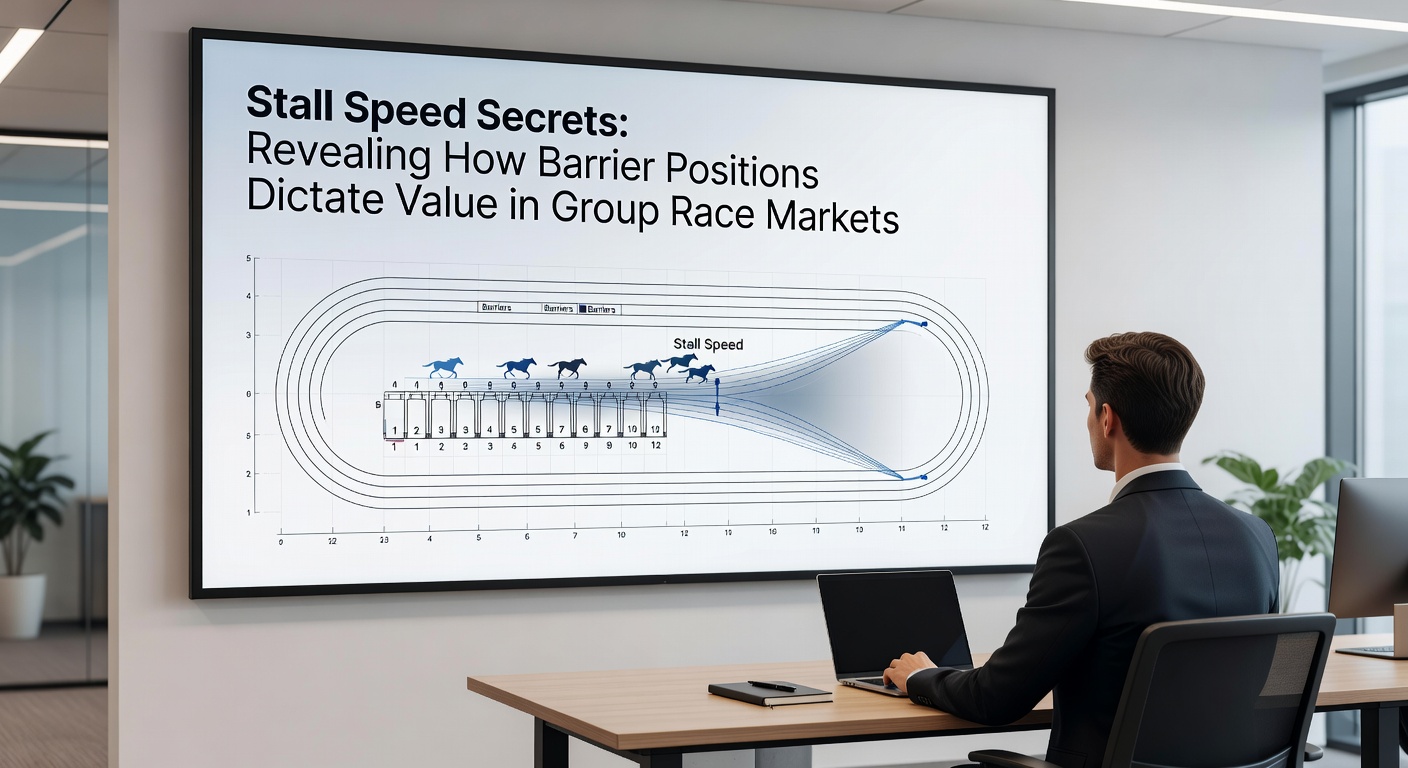
Starting stalls assign horses to fixed positions along the track width, and this allocation interacts directly with course configuration, rail position, and pace dynamics. Inside barriers typically allow quicker access to the rail on turning tracks, which reduces distance traveled, while wider draws force horses to cover extra ground or settle in less favorable running lines. Data from multiple jurisdictions shows that these geometric differences produce statistically significant variations in place and win rates, particularly over distances between 1200 and 1600 meters where early positioning matters most.
Researchers at the University of Sydney's equine performance laboratory have quantified how barrier impact scales with field size, noting that in fields of twelve or more runners the outer stalls lose an average of 0.8 lengths in effective distance on standard left-handed circuits. Track maintenance crews adjust rail positions seasonally, yet the underlying bias persists across meetings and provides a stable variable for market modeling.
Statistical Patterns in Group Race Results
Long-term datasets compiled by racing authorities reveal that barrier one through three deliver win percentages 18 to 24 percent above the field average in Group 1 and Group 2 events on tracks with pronounced turns. Conversely, barriers nine and beyond record strike rates 12 to 15 percent below expectation when adjusted for horse ability ratings. These margins widen in wet conditions because moisture alters footing and favors runners that secure inside runs early.
What's interesting is how these percentages translate into betting value when bookmakers adjust odds more slowly than the data warrants. Market odds often reflect public perception of horse form while underweighting draw statistics, creating overlays on well-drawn runners whose true probabilities exceed their quoted prices. Observers note that this lag appears most frequently in international Group races where participants travel from different racing jurisdictions and local draw biases receive less attention from overseas bettors.
Market Reactions and Odds Adjustments
Betting exchanges and traditional bookmakers incorporate barrier information into their pricing models at varying speeds, and the resulting discrepancies create exploitable inefficiencies. In June 2026, several major Group races scheduled across Australian and European calendars are expected to feature large fields on tracks with documented draw biases, according to preliminary entries released by event organizers. Automated trading systems already monitor these variables in real time, yet retail markets continue to show slower integration of stall-specific adjustments.
One study released by the Racing Science Centre in Canada examined 2,400 Group-level runs and found that horses drawn inside four generated a 7.2 percent positive return on starting price bets when selected against the market average. The same research indicated that wide-drawn favorites underperformed their expected strike rates by a margin large enough to shift implied probabilities by three to five percentage points. These findings align with similar analyses conducted by the Japan Racing Association on their turf courses, where barrier impact follows comparable curves despite different track surfaces.
Application in Accumulator and Multi Markets
Group race betting often occurs within multi-leg wagers, and barrier data helps refine selections across linked events. Bettors who filter runners by draw statistics before assessing form reduce variance in their portfolios because the position variable operates independently of most other performance factors. Industry reports from the Thoroughbred Breeders Association in Australia highlight that syndicates using draw-weighted algorithms recorded steadier returns over five-year periods compared with those relying solely on speed figures or trainer records.
Live markets during race meetings further demonstrate how barrier effects compound once the race begins, because early leaders from favorable stalls dictate the tempo and force wider-drawn horses to expend additional energy. This dynamic produces second-order value in place and quinella markets when initial pace maps deviate from pre-race expectations.
Conclusion
Barrier positions function as a quantifiable input that shapes both actual race outcomes and the odds offered in group race markets, and comprehensive datasets now allow systematic incorporation of this variable into betting frameworks. Continued collection of stall-specific statistics across regions will refine these models as more events occur in 2026 and beyond.